Good moves are not all there is with chess. It is also concerning the amount of time you have to locate them. This is why time controls in chess are the subject of such a critical discussion among all players, including those who are just starting to learn, and those who are in serious competition. The clock alters the manner in which you think, the manner in which you plan and even the manner in which you commit errors.
The first group of people plays fast-paced games which measure time in seconds. Some players prefer to fight their opponents through combat which requires them to think about their next move and develop their combat plan. Both styles are acceptable in chess. Time control needs to match your objectives which include your skill level and your preferred handling of stress.
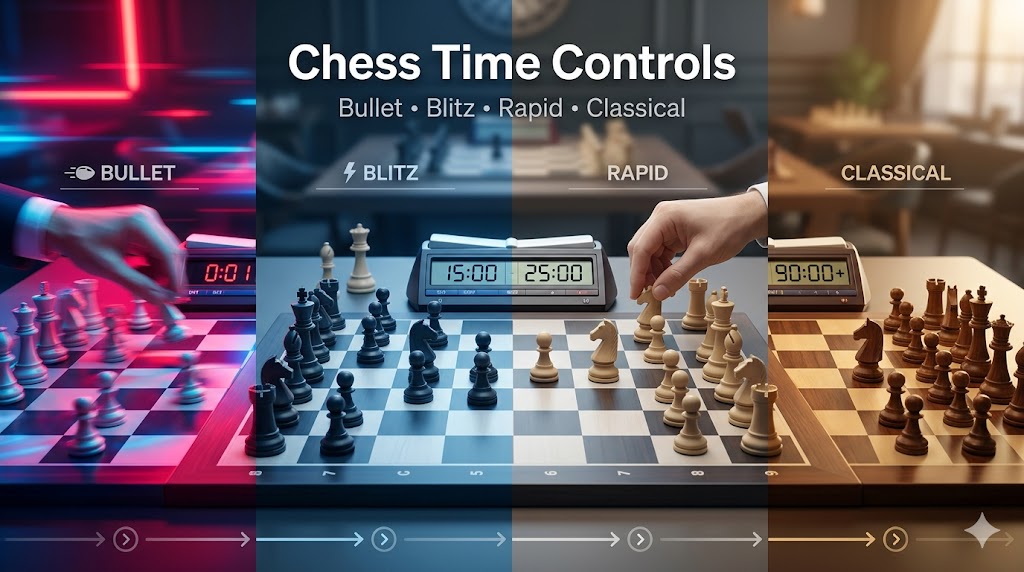
The common chess classifications operate with bullet chess showing time limits below 3 minutes for each player while blitz chess runs from 3 to 10 minutes and rapid chess operates within a 10 to 60 minute range and classical chess extends beyond 60 minutes for each player.
What is a chess time control?
Chess time control defines the total duration which each player requires to complete their chess match. The chess clock controls your available thinking time for each move in both offline chess and online chess matches. Different time controls create different game experiences even though chess rules remain unchanged.
This is the reason why a 3 minute game would be a total contrast to a 90 minute game. In a game where the speed is higher, intuition will be more important. The emphasis on deep calculation and long-term planning is more important in a slower game. It is also the reason why certain players are strong in one format and not in the other.
The four main formats
Bullet, blitz, rapid and classical are the four major time control formats. These are the most widely-used divisions in the online chess and competition play, though precise divisions may deviate a bit depending on the platform or federation.
Bullet
The quickest mainstream chess is bullet. It typically represents less than 3 minutes per player and most games are played at 1 minute or 1 minute with increment. Speed is all in bullet. There is not enough time to compute every position to the deepest level and, therefore, pattern recognition and quick decision making are essential.
Bullet is frenzied, yet disorganized. Novices tend to watch it first before they are prepared to take it seriously. In case you are only learning openings, Fundamental tactics and checkmates, bullet may be intimidating since there is virtually no time to correct your mistakes.
Blitz
The most popular form of chess is fast chess (blitz). It typically lasts 3-10 minutes per player and certain platforms slightly increase the range based on the increment or total estimated game time. Blitz allows you some more breathing-space than bullet, although not a lot. You should also be able to think fast, be alert and watch your clock.
Blitz is usually the middle ground between the players who are interested in speedy fun games and those who want complete and total chaos. It is an incentive to good taste, to tact, and to the knowledge of popular stands. You may still count, but you can not take too long over each turn.
Rapid
The rapid one provides the players with an adequate amount of time to think but not to the point that the game becomes impossibly long. It is widely considered to be 10 to 60 minutes per player, with varying definitions depending on the platform or organizer. This format is particularly helpful with players who want to become better since they have sufficient time to plan and analyze positions correctly.
To most novices, fast is a good place to start. It allows you room to make considered actions, observe strategies, and improve on your errors. You require time management in fast games, yet you are less likely to lose merely because you clicked too swiftly.
Classical
The slowest major format is classical. It typically implies over 60 minutes per player and in major tournaments may take considerably longer, typically with increment. Deep strategy is where classical chess is concerned. Players are able to learn the position, develop long-term plans and compute variations more cautiously.
This format is nearest to the traditional picture that many people have in mind concerning chess. It is cool, technical, and challenging. Simultaneously, it is also taxing, mentally, since a single game may take several hours.
The difference between the formats.
These differences are most apparent in the board or pieces, which do not represent the biggest difference between these formats. It is the amount of thinking time. The shorter the time control, the more intuition, reflexes and pattern recognition the players depend on. The longer the time control, the more calculation, accuracy, and patience are important.
Here is a simple way to think about it:
This is a handy shortcut of a table, yet the psychological difference is the actual one. A player who plays calmly in classical can be in a hurry in blitz. The other player can flourish in bullet since he/she is at ease making pragmatic decisions in a short time.
What to be played by whom?
The optimal time management is relative to your level and your goal. When you plan to improve your chess, then often the best place to start is by playing fast since it does not add the pressure of time management.
When you are a novice, fast is normally the safest bet. It also teaches you to analyse positions, see hangers and think first. Blitz is also a good game when you know the fundamentals but it is second nature to form bad habits when you only play very fast games.
In case you want to have fun blitz and bullet are more fun. They suit short sessions, fast-paced games on the Internet and amusement. In case you want to be really competitive, classical is the most admired form as it enables the maximum of calculating and planning.
Time increments and delays
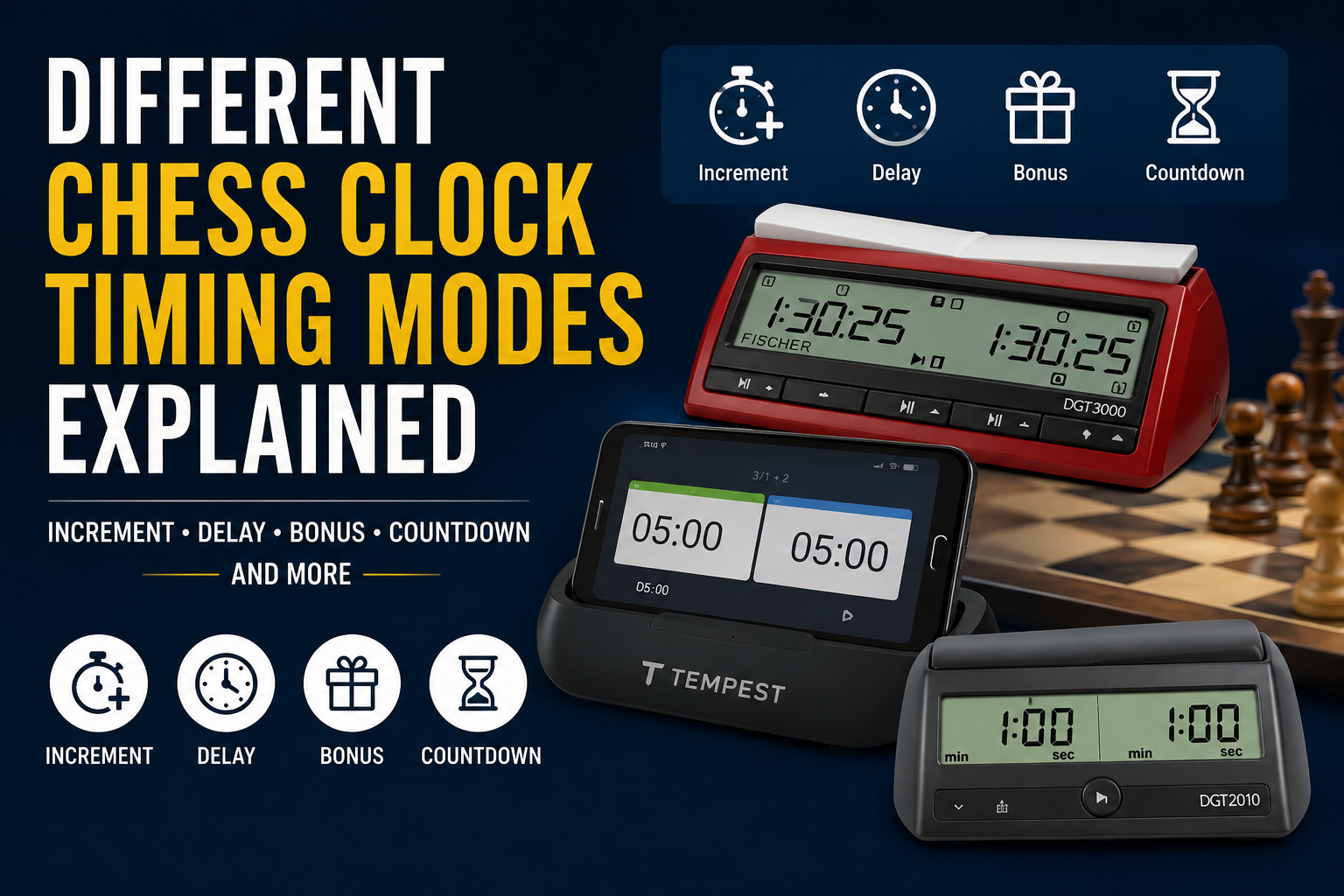
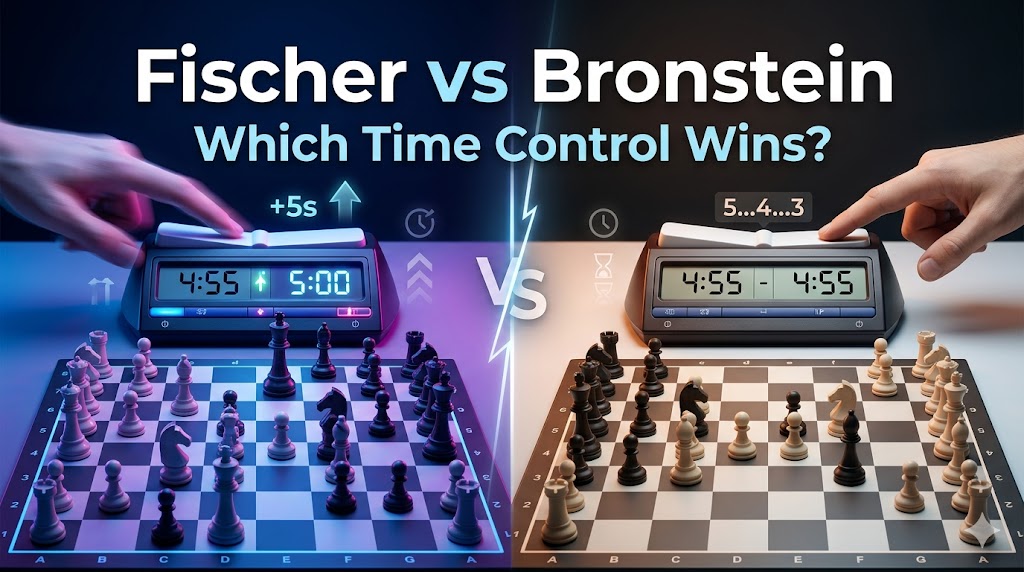
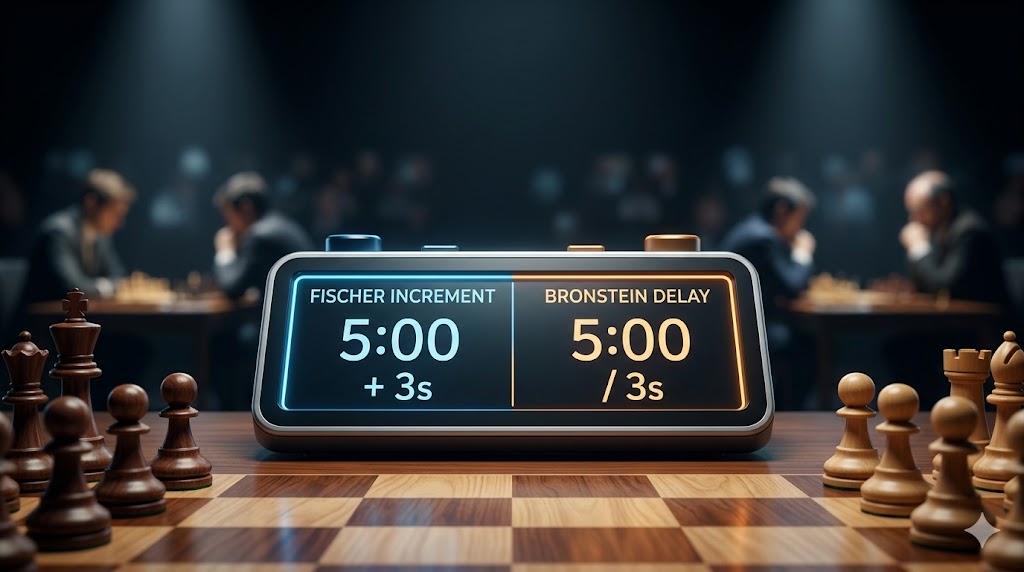
Increment or delay is used by many current chess clocks. Increment refers to the time addition after each move; e.g., 2 or 5 seconds. This can render quick games easier since gamers get a small time incentive each move.
Delay is a bit different. It allows you some little time grace before your clock even begins to count down. The two systems are aimed at making time controls more practical and fair particularly in blitz games.
You have learned from data which exists until the month of October in the year 2023. Increment systems provide beginners with better understanding because they allow players to make more mistakes than other systems. The system helps players maintain better time management during their games since it slows down their endgame play.
Why time controls matter
Time controls do more than regulate the game. The time controls determine which type of chess game you will engage in. Players in slow games must dedicate time to their strategic development. Fast games require players to make decisions while facing time constraints. Both activities provide useful benefits but they develop distinct abilities.
The system establishes equal competition among players. The absence of a clock would enable one player to think indefinitely which would result in extended battles during each match. The clock system maintains game momentum while establishing identical time restrictions for both contestants.
For website content, this topic is especially important because many users search for simple explanations before buying a chess clock or choosing a time control for practice. The clear guide will help them identify format names while also informing them about the way those formats will influence their gaming style.
Which one is best for you?
For your answer which requires only one solution you should begin your studies with the rapid format. The learning path leads to competitive play through this format which provides beginner players with their first experience of actual competition.
Blitz offers you high-energy matches which maintain a fast pace throughout the entire experience. The fastest test of reflexes can be found in bullet challenges which require immediate responses to every situation. Classical chess provides players with the most extensive and challenging experience through its most demanding format.
Most top chess players maintain their ability to adapt to different formats throughout their careers. The players use rapid for their skills development while using blitz to develop their quick decision-making abilities and they use bullet for enjoyable speed training and classical for advanced learning and tournament readiness.
Final thoughts
Chess time controls function as a crucial component which determines present-day chess matches. The game design determines player behavior and creates situations which lead to player errors. You can select your desired format after learning about bullet and blitz and rapid and classical gameplay.