Every chess player fears that moment — the chess clock runs out and your flag falls. But what happens when chess clock runs out? Does it mean instant loss? Are there exceptions? This guide clears up the rules for beginners and tournament players alike.
At chesstimerdigital.com, our digital clocks show exact time remaining to avoid surprises. Whether you're playing blitz or classical, knowing clock rules keeps your games fair and stress-free.
FAQ 1: What Does "Flag Fall" Mean?
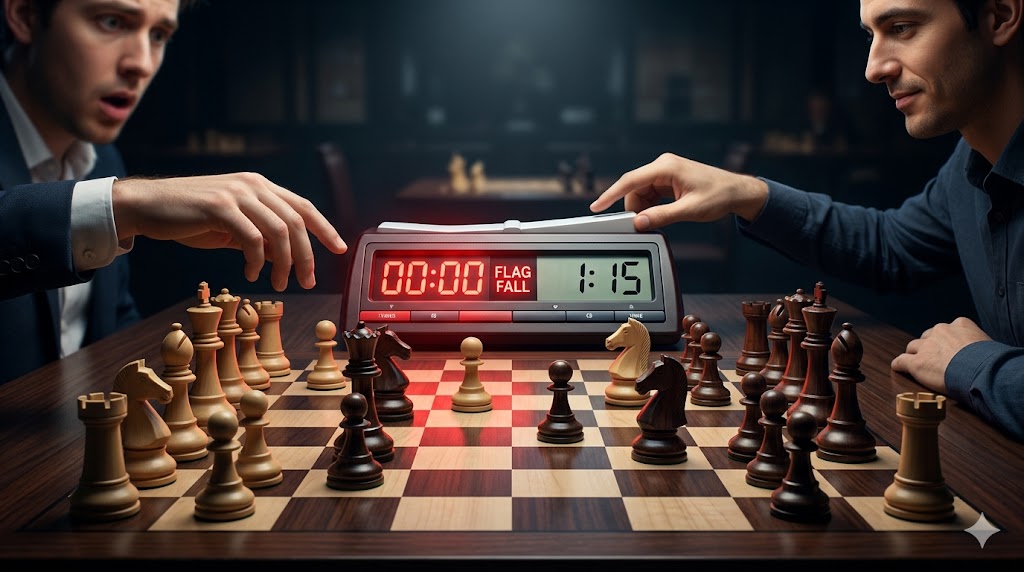
When your chess clock runs out, the flag drops — a visual signal your time is zero. On digital clocks, it shows 00:00 with an alert sound or light.
This ends your turn immediately. Your opponent wins on time, even if the board position favors you.
Simple rule: Zero time = game over. No extensions.
FAQ 2: What Happens When Chess Clock Runs Out?
Standard rule: You lose the game by time forfeit. Your opponent wins, regardless of pieces or checkmate status.
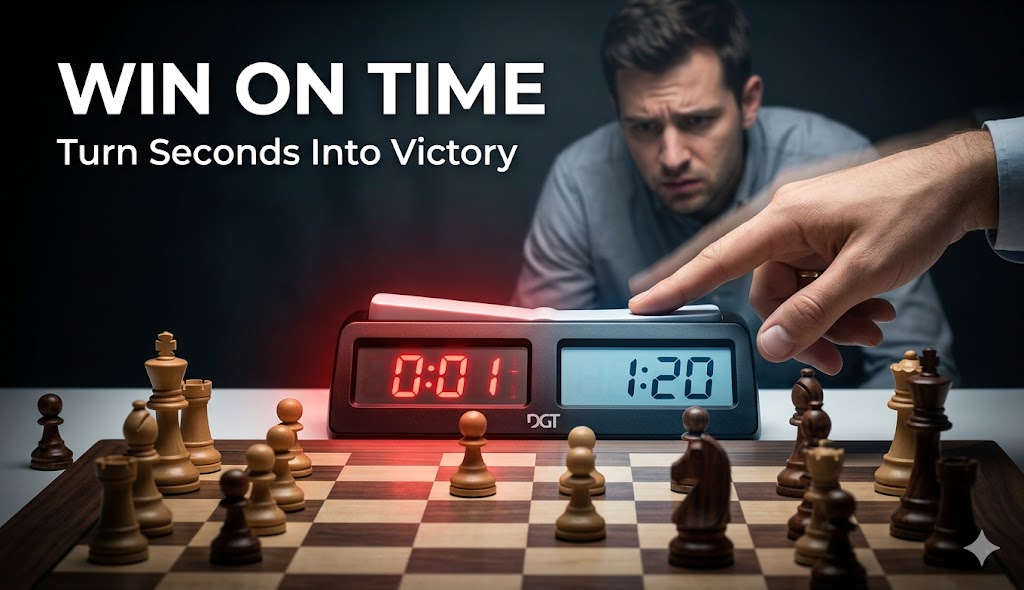
Example: You're up a queen but have 0:01 left. You move, press clock — flag falls. Opponent wins, even with just a king.
This applies to all formats — bullet, blitz, rapid, classical.
FAQ 3: Are There Any Exceptions?
Yes, rare cases exist:
-
Checkmate already occurred: If you checkmate before flag falls, you still win.
-
Stalemate/insufficient material: Board position decides, not clock.
-
Draw claims verified: If opponent has time but position is drawn.
Tournament exception: Arbiter can adjust for clock malfunction (proven by both players).
Casual play: Friends often ignore flags for fun.
FAQ 4: Digital vs Analog Clock Flags
Digital clocks:
-
Loud beep + flashing 00:00.
-
Automatic flag detection.
-
Precise to 0.1 seconds.
Analog clocks:
-
Physical red flag drops on dial.
-
Can be ambiguous (partial drop).
-
Requires arbiter verification.
Digital is standard today — no disputes.
FAQ 5: Common Flag Fall Scenarios
Pro tip: Always check opponent's time too.
FAQ 6: Why Time Forfeit Exists
Clocks prevent stalling. Without them:
-
Players think days per move.
-
Games never finish.
-
Weaker player delays loss.
Time limits test complete skill — board + clock management.
FAQ 7: Preventing Clock Run-Out
Beginner strategies:
-
Budget time: 30% opening, 50% middlegame, 20% endgame.
-
Use increment: 10|5 > 10|0 always.
-
Practice faster: Play 15|10 daily.
-
Premove legally: Online only.
Our clocks: Low-time alarms (set to 1:00, 0:30, 0:10).
FAQ 8: What If Opponent Claims Flag Wrongly?
Online: Automatic — no disputes.
Over-the-board:
-
Opponent stops both clocks.
-
Arbiter verifies flag position.
-
If wrong claim → 2-minute penalty to claimant.
Never touch a running clock! Illegal move penalty applies.
FAQ 9: Famous Flag Fall Moments
-
Game 6, 1993 Kasparov-Short: Kasparov flagged in winning position.
-
Blitz legends: Hikaru Nakamura wins 0:00 vs 0:01 repeatedly.
-
Beginner nightmare: Perfect attack, wrong clock press = instant loss.
These stories show: clock skill = chess skill.
FAQ 10: Tournament Clock Rules Summary
FIDE official:
-
Flag fall = loss unless winning position proven.
-
Both flags = draw.
-
No appeal after opponent stops clock.
Casual house rule: Often ignored, but learn official rules anyway.
FAQ 11: Best Clocks to Avoid Time Trouble
Choose digital with:
-
Large display (1.5"+ digits)
-
Increment presets (5|5, 15|10)
-
Sound alerts (30s, 10s, 5s)
-
Flag history (review exact moment)
Our chesstimerdigital.com tournament clocks eliminate flag disputes completely.
Final Answer: Clock Run-Out Means Loss
What happens when chess clock runs out? You lose by time forfeit. No mercy, no extensions — unless checkmate already happened.
Master your clock like your openings. Practice with increment. Watch both flags. The player who manages 3:47 vs 3:46 wins more games.